Kulta Kult
OUR
STORY.
Kulta Kult was not born from aesthetic ambition, it emerged from observation. From noticing how clothing, especially for women and gendered bodies, was rarely just clothing. It was often treated as morality, character, and permission. Expression arrived carrying questions long before confidence: Is this appropriate? What will people think? Does this say something about me?
Over time, we began noticing how often visibility required justification, and how language quietly shaped these negotiations. Certain words followed women the moment they became harder to contain, women who were too expressive, too visible, too ambitious, too certain of themselves. Words used not only to describe, but to discipline.
Kulta is one of them.
Historically, the word has been used to shame women, to reduce complexity into moral judgement, and to make women smaller than the lives they wished to claim. Instead of distancing ourselves from that discomfort, we became interested in confronting it. What happens when the language meant to shrink women loses its power?
Kulta Kult grew from these questions. As an exploration of expression without constant negotiation. We are interested in what it means to exist visibly without apology, and in the larger politics surrounding who gets to be seen, who gets to express, and who is allowed complexity without consequence.
Clothing is part of this conversation, but not the whole of it. The politics of Kulta Kult live equally in the language we use, the stories we choose to centre, and the conversations we hope to make possible. Because the pressures around expression have never existed only in garments; they live in culture, expectation, judgement, and the invisible negotiations many women move through every day.
Heart
THE FOUNDER
I've always been interested in fashion. Not just in what we wear, but where we wear it, who gets to wear it, and who gets to decide what's acceptable.
I grew up in a village in Haryana where, for a long time, girls weren't allowed to wear jeans. Looking back, I don't think it was ever about the jeans. It was about control. About deciding what expression was acceptable and whose wasn't. That stayed with me.
The more people I met and the more stories I listened to, the more I realised that fashion has never been just about clothing. It's one of the many ways we negotiate identity, power, belonging and freedom. What we choose to wear — and what we're allowed to wear — often says more about the world we live in than it does about us.
I'm Manisha. I've spent years working with communities, listening to stories that challenged the way I understood gender, caste, identity and expression. Those conversations shaped me. They taught me to look beyond what people wear and ask why they wear it — or why they don't.
I don't create because I think fashion changes the world. I create because I believe it reveals the world we're living in — and it also reveals the person we're becoming.
So I'll leave you with the question I keep coming back to:
How much of what you wear is your choice, and how much of it was chosen for you?
Brain
Brand Strategist
For as long as I can remember, I have been fascinated by how something as ordinary as getting dressed could carry so much emotion. Colour, silhouette, and texture have the power to change how we inhabit our bodies and move through the world. To me, fashion has always been one of the most accessible forms of self-expression(and one of the most misunderstood).
Growing up, expression came with negotiation. What I wore was often subject to permission, expectation, and the quiet belief that some choices simply weren't mine to make. Looking back, I realise the first negotiation wasn't with society; it was with myself.
My name is Hayat, and that experience continues to shape how I think about fashion. I believe clothing is one of the first places we practise authorship. I also believe fashion can be a form of resistance; sometimes against society, sometimes against the part of ourselves that has learned to shrink because it feels safer, or simply because it's what's expected of us.
At Kulta Kult, I hope we create more than garments. I hope we create moments where people experience a little less friction between who they are and how they show up in the world.
Whether or not someone ever wears Kulta Kult, I hope they leave believing that clothing holds more power than we've been taught to give it credit for:
that what we wear can transform how we see ourselves, and over time, perhaps even what the world learns to see as possible; that joy deserves to be visible; that colour is never superficial; and that a world where more people feel at home in their own expression is a world worth helping to create.
Artisan Story
THE WOMEN
BEHIND KULTA KULT
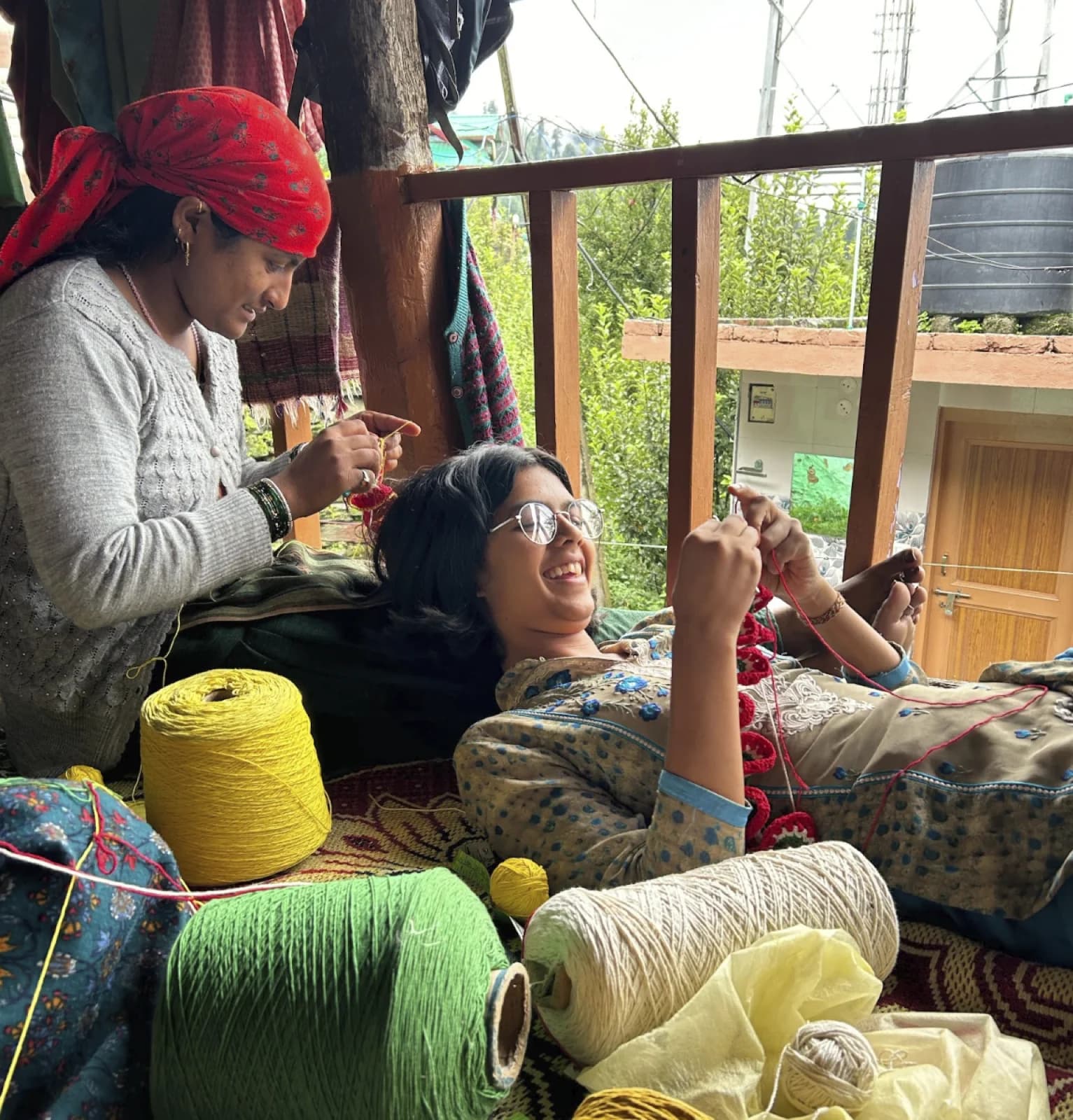
Many of the women behind Kulta Kult are the kind of women villages talk about. The ones who continued showing up after being told crochet was 'just time pass.' The ones who insisted on travelling outside the village for exhibitions when it wasn't considered necessary. The ones who chose work even when it invited opinions. The ones who made personal choices around love, marriage, or life that did not always fit neatly into expectation.
Most of the women we work with come from caste-oppressed communities across villages in the Himalayas (Himachal Pradesh), places where people are often told what kind of life is realistic for them. These women tend to disagree.
In many ways, the women behind Kulta Kult have already been negotiating the kinds of questions this brand asks: about choice, visibility, work, love, and who gets to decide what kind of life is acceptable.
Which is perhaps why Kulta Kult feels less like a brand being built and more like a language already shared.
Shop the Collection